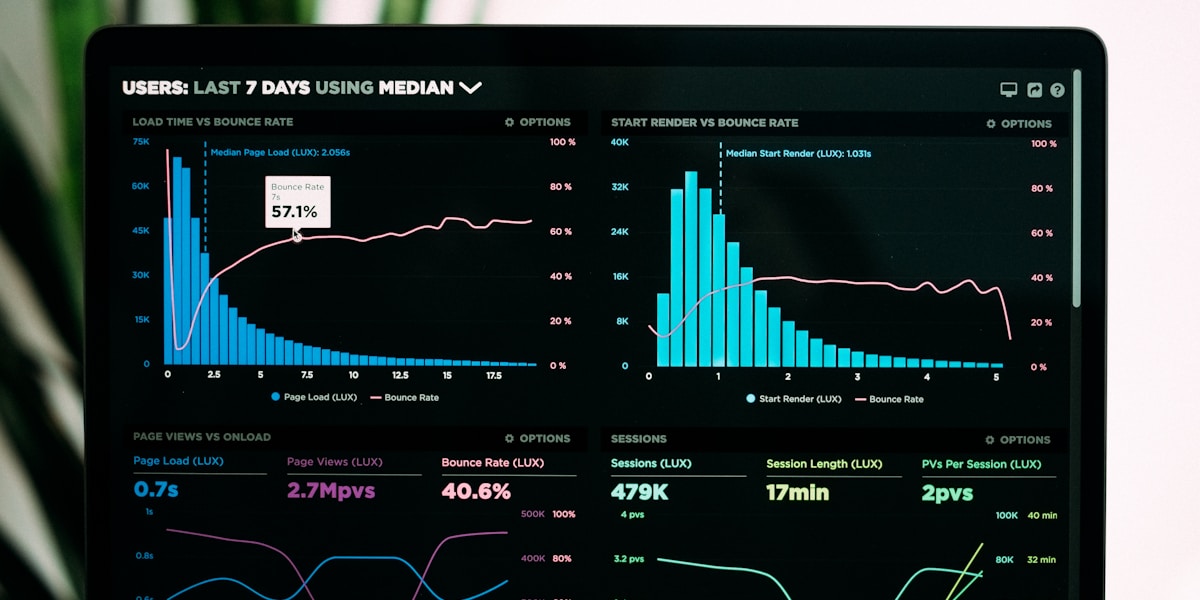
Token optimization directly impacts AI costs. Every token consumed costs money, and agents can use millions of tokens per day. Learning to minimize token usage while maintaining effectiveness is essential for cost-effective AI operations.
Understanding Token Costs
AI models charge based on tokens processed—both input and output. A token is roughly 4 characters or 0.75 words. Costs vary by model: GPT-4 is significantly more expensive per token than GPT-3.5 or GPT-4-mini.
Small inefficiencies compound quickly. An extra 100 tokens per request might seem insignificant, but across 100,000 requests per day, that's 10 million wasted tokens—potentially hundreds of dollars in unnecessary spending.
Prompt Optimization Techniques
Remove Unnecessary Instructions
Many prompts include redundant or unused instructions. Review your prompts and remove anything the agent doesn't actually use. Every removed word saves tokens on every request.
Example: Instead of "You are a helpful assistant. Please help the user with their question. Be polite and professional. Provide accurate information." use "Help the user accurately and professionally."
Use Concise Language
Say more with fewer words. Eliminate filler words, use active voice, and prefer shorter synonyms. "Utilize" becomes "use." "In order to" becomes "to."
Optimize Examples
Few-shot examples help agents understand tasks but consume tokens. Use the minimum number of examples needed for good performance. Test whether 3 examples work as well as 5.
Context Window Management
Limit Conversation History
Agents maintain conversation history for context. Long histories consume tokens on every request. Implement sliding windows that keep only recent messages, or summarize old conversations to reduce token count.
AgentWall provides automatic context pruning that intelligently removes old messages while preserving important information.
Smart Context Selection
Not all context is equally valuable. Use relevance scoring to include only the most pertinent information. An agent doesn't need the entire conversation history—just the parts relevant to the current request.
External Memory
Store information outside the context window and retrieve it only when needed. This approach dramatically reduces token usage for agents that work with large datasets or long conversations.
Model Selection
Use Appropriate Models
Not every task needs GPT-4. Simpler models like GPT-3.5 or GPT-4-mini cost less and work well for straightforward tasks. Reserve expensive models for complex reasoning that justifies the cost.
Implement model routing that automatically selects the cheapest model capable of handling each task. AgentWall provides intelligent routing based on task complexity.
Fine-Tuned Models
Fine-tuned models can achieve better results with shorter prompts. The model already understands your domain and style, reducing the need for lengthy instructions and examples.
Output Optimization
Limit Response Length
Set maximum token limits for responses. Agents often generate more text than necessary. Explicit limits prevent verbose outputs that waste tokens and user time.
Structured Outputs
Request structured formats like JSON instead of natural language when appropriate. Structured outputs are typically more concise and easier to parse programmatically.
Caching Strategies
Response Caching
Cache responses for identical or similar requests. If multiple users ask the same question, serve the cached response instead of calling the AI model again.
Implement semantic caching that recognizes similar questions even when worded differently. This advanced caching can dramatically reduce API calls.
Prompt Caching
Some providers offer prompt caching where repeated prompt portions are cached server-side. Structure your prompts to maximize cache hits: put static instructions first, variable content last.
Monitoring and Analysis
Track Token Usage
Monitor token consumption per agent, per task type, and per user. Identify which operations are expensive and prioritize optimization efforts accordingly.
AgentWall provides detailed token analytics: average tokens per request, most expensive agents, and trends over time. Use these insights to guide optimization.
A/B Testing
Test prompt variations to find the optimal balance between token usage and quality. Sometimes a shorter prompt works just as well as a longer one—you won't know until you test.
Advanced Techniques
Prompt Compression
Use compression techniques that reduce token count while preserving meaning. This might involve abbreviations, removing articles, or using domain-specific shorthand.
Batch Processing
Process multiple requests together when possible. Batching can reduce overhead tokens that would be repeated for each individual request.
Streaming Optimization
With streaming responses, you can stop generation early if you have enough information. This prevents generating unnecessary tokens when the answer is already complete.
Cost-Quality Tradeoffs
Token optimization isn't about minimizing tokens at all costs. It's about maximizing value per token. Sometimes spending more tokens improves quality enough to justify the cost.
Establish quality metrics and monitor them alongside token usage. Ensure optimizations don't degrade performance below acceptable levels.
Conclusion
Token optimization is an ongoing process of measurement, experimentation, and refinement. By implementing these techniques and continuously monitoring results, you can significantly reduce AI costs while maintaining agent effectiveness.
AgentWall provides tools for token tracking, optimization recommendations, and automatic cost controls. Start optimizing today and see immediate cost reductions.
Frequently Asked Questions
Organizations typically reduce token usage by 30-50% through systematic optimization. Savings depend on current efficiency—poorly optimized systems see larger improvements.
Not if done carefully. The goal is removing waste, not cutting necessary context. Monitor quality metrics alongside token usage to ensure optimizations don't degrade performance.
Start with high-volume operations. Optimizing a prompt used 100,000 times per day has more impact than optimizing one used 10 times. Focus on the biggest cost drivers first.
Monitor continuously but review optimization opportunities monthly. Token usage patterns change as your application evolves, requiring ongoing attention.